
Mass spectrometers — GC-MS and ICP-MS
Mass spectrometry separates ions by mass-to-charge ratio, giving unambiguous identification and quantification down to trace levels. This group pairs gas chromatographs coupled to a mass spectrometer (GC-MS 6800 and 6800S) for organic compounds with the ICP-MS2000 system for elemental analysis in the trace and ultra-trace range. We will match the instrument and configuration to your matrices, target analytes and required detection limits.
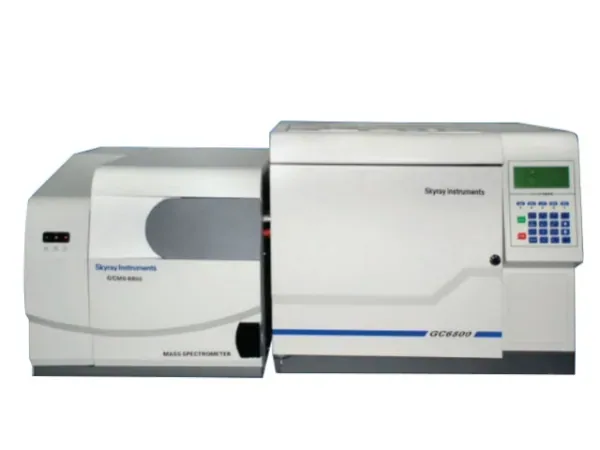
Mass spectrometers — GC-MS and ICP-MS — available models
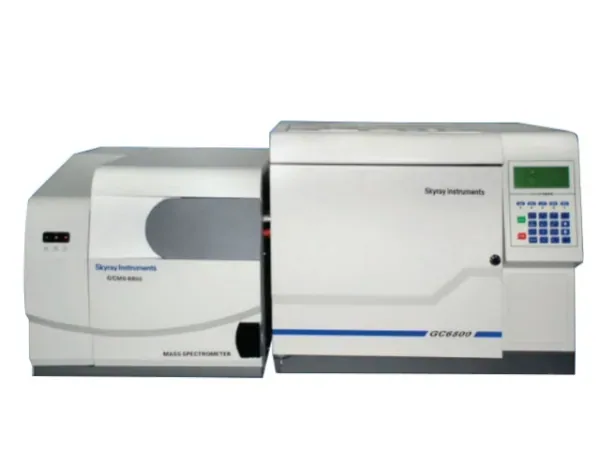
GC-MS 6800
Benchtop GC-MS with a quadrupole mass analyser and an in-house gas chromatograph — for qualitative and quantitative analysis of volatile and semi-volatile organic compounds in environmental, food and industrial samples.
- GC column separation and mass-detector identification in a single run
- Electronic flow and pressure control (EFC/EPC) for repeatable conditions
- High-output ion source, emission up to 350 µA
- Quadrupole with a pre-quadrupole limits analyser contamination
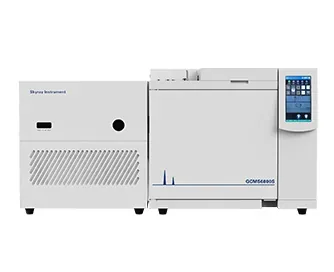
GC-MS 6800S
A starting point for selecting a complete GC-MS solution for organic-compound analysis—from sample type and introduction technique to method requirements and laboratory workflow.
- System selection based on target compounds, matrices and required quantification limits
- Sample-introduction technique matched to the analytical method
- Configuration for environmental, food and industrial analysis
- A route to RoHS 2.0 phthalate screening when pyrolysis is required
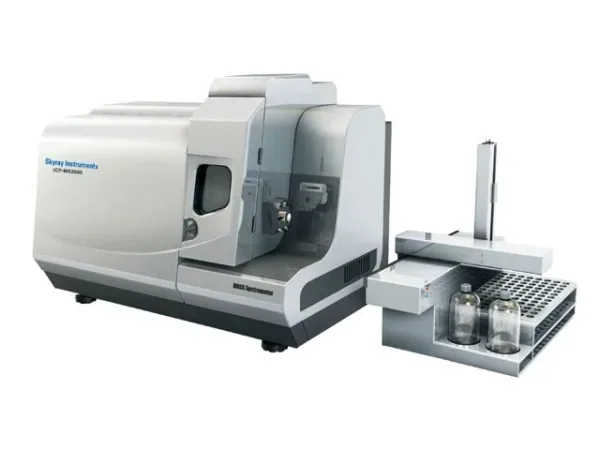
ICP-MS2000
Inductively coupled plasma mass spectrometer (ICP-MS) for multi-element trace and ultra-trace analysis — detection limits at ppt level and a wide dynamic range; a series in 2000, 2000B and 2000E variants.
- Determination of most elements in the periodic table
- Detection limits at the ppt level
- Wide, multi-order dynamic range — major and trace elements in one measurement
- Simple spectra and low interferences